


SYNOPSIS
The short documentary tells the story of Alon Ohel, a talented pianist who was kidnapped to Gaza from the "Nova" music festival on October 7th. The film is told from the perspective of the filmmaker, Itay Vinter, a young man who does not know Alon personally but finds a deep connection with him through their shared home in the Galilee and, above all, their shared love for music and the piano.
The narrative follows the filmmaker's meeting with Idit Ohel, Alon's mother, who chooses to cope with the tragedy and uncertainty through art, creativity, and hope. Inspired by Idit's strength of spirit, and in an attempt to feel closer to Alon, Itay challenges himself to learn to play the complex piece "Clair de Lune" by Debussy, which Alon performed at his high school graduation recital.
The film documents the process of learning the piece, alongside events marking Alon's birthday in captivity and the receipt of a sign of life from him. It culminates in a moving performance of the piece by the filmmaker on Alon's "Yellow Piano" at Hostages Square. This is interwoven with archival footage of Alon playing, as well as performances by many other musicians who rallied for the cause. The film highlights the power of music to connect people, shift consciousness, and offer hope even in the darkest times, driven by the belief that as long as Alon's melody is played—he is not alone.
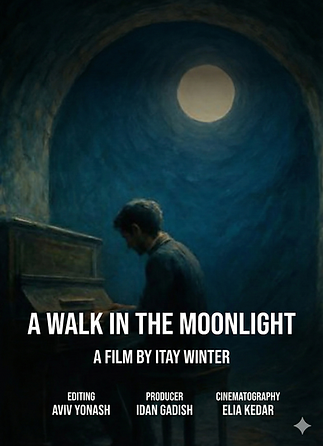
Credits
Director: Itay Vinter
Producer: Idan Gadish
Cinematography: Eliya Kedar
Editor: Aviv Yonesh
Supervising Teacher: Eldar Galor
School: Manor Kabri
Lesson Plans
Guided Viewing of the Film

Playing in the Dark
Cinematic Language
The film employs a poetic and personal cinematic language to bridge the gap between the national and personal tragedy and hope. The cinematic expression relies on several central elements:
1. The Soundtrack as a Narrative Driver The music in the film is not merely background music, but the silent "protagonist" that propels the plot.
-
Bridging Music: The piece "Clair de Lune" serves as a connecting thread (Leitmotif). It is heard in various performances: Alon's original playing (archive), the hesitant attempts of Itay (the filmmaker) to learn it, and the collective performance at the end. The transition between performances creates the sensation that Alon is present in the room through the sounds.
-
Silence and Speech: There is a use of Itay's voice in a personal and intimate Voice Over, which contrasts with the usual noise of the news cycle. The calm and contemplative voice draws the viewer into his inner world.
2. Editing as a Connector The editing builds a relationship between two characters who have never met – Itay and Alon.
-
Cross-Cutting: The film cuts between Itay's hands playing the piano at home, and archival footage of Alon's hands playing the same piece. This technique blurs the boundaries and creates a sense of shared destiny.
-
The Closing Montage: The final scene is edited as a rhythmic montage combining dozens of different musicians, Itay at "Hostages Square," and Alon. This editing visually illustrates the concept of a "shared frequency" and solidarity.
3. Cinematography and Composition
-
Close-ups: The camera focuses heavily on hands – hands playing, hands drawing (of the mother, Idit). The close-ups emphasize action and creation as tools for coping, fostering a deep sense of intimacy.
-
Galilee Landscapes vs. Reality: There are wide shots of the green and quiet landscapes of the Galilee, contrasting with the harsh story of the kidnapping and the busy urban environment of "Hostages Square" in Tel Aviv. This contrast intensifies the sense of the home that was taken away.
4. Visual Symbolism
-
The Yellow Piano: The piano in "Hostages Square" is a prominent symbol. The yellow color (identified with the struggle for the return of the hostages) stands out visually against the gray background of the city, symbolizing hope and a silent cry.
-
Light and Shadow: In keeping with the film's title, there is a visual interplay between illuminated moments (the musical piece, the painting, the landscape) and the dark subject matter. The choice to film the piano playing in natural daylight emphasizes the choice of life and hope.